
Use Resources Responsibly.
Improve Continuously.
SPK’s mission is to turn traceable rubberwood and sawmill residues into dependable products and renewable biomass—while strengthening operational discipline, resource efficiency, and supply-chain transparency.
Practical Progress, Supported by Responsible Operations
We focus on actions within our control: knowing where material comes from, using more of every suitable resource, maintaining consistent operating standards, and improving how we measure and manage performance over time.
Four Commitments Behind Every Decision
Responsible Sourcing
Work with legal, traceable rubberwood sources and long-term plantation partners in Southern Thailand.
Resource Efficiency
Use suitable rubberwood and processing residues efficiently across material and biomass applications.
Reliable Operations
Maintain disciplined processes that support consistent quality, dependable supply, and customer requirements.
Continuous Improvement
Strengthen traceability, efficiency, compliance, and performance through practical investment and learning.
A Resource with a Productive Second Life
Rubber trees are typically tapped for latex for around 20–25 years. At the end of this productive cycle, mature trees can be replaced with new planting while suitable wood enters a new value chain.
Plantation Cycle
Rubber plantations support latex production over many years in Southern Thailand.
Replanting
Mature trees reach the end of their latex cycle and plantation areas are prepared for renewal.
Rubberwood Products
Suitable rubberwood is processed through specialized sawmill operations.
Biomass Use
Suitable residues can be recovered for wood pellet and other biomass applications.
Turning Suitable Residues into Useful Energy
Wood pellet production creates an additional use for suitable wood residues from the rubberwood value chain. This supports better material utilization and provides customers with a renewable solid-fuel option.
The environmental performance of any biomass system depends on responsible sourcing, processing, transport, combustion technology, and the applicable sustainability criteria. SPK’s role is to strengthen the parts of this chain that we can manage and document.
Standards Before Slogans
Know the Source
Maintain documentation and supplier relationships that support legal and responsible rubberwood sourcing.
Use Resources Better
Improve yield, residue utilization, process control, and equipment performance across the group.
Meet Requirements
Align relevant operations and documentation with applicable legal, customer, and biomass sustainability requirements.
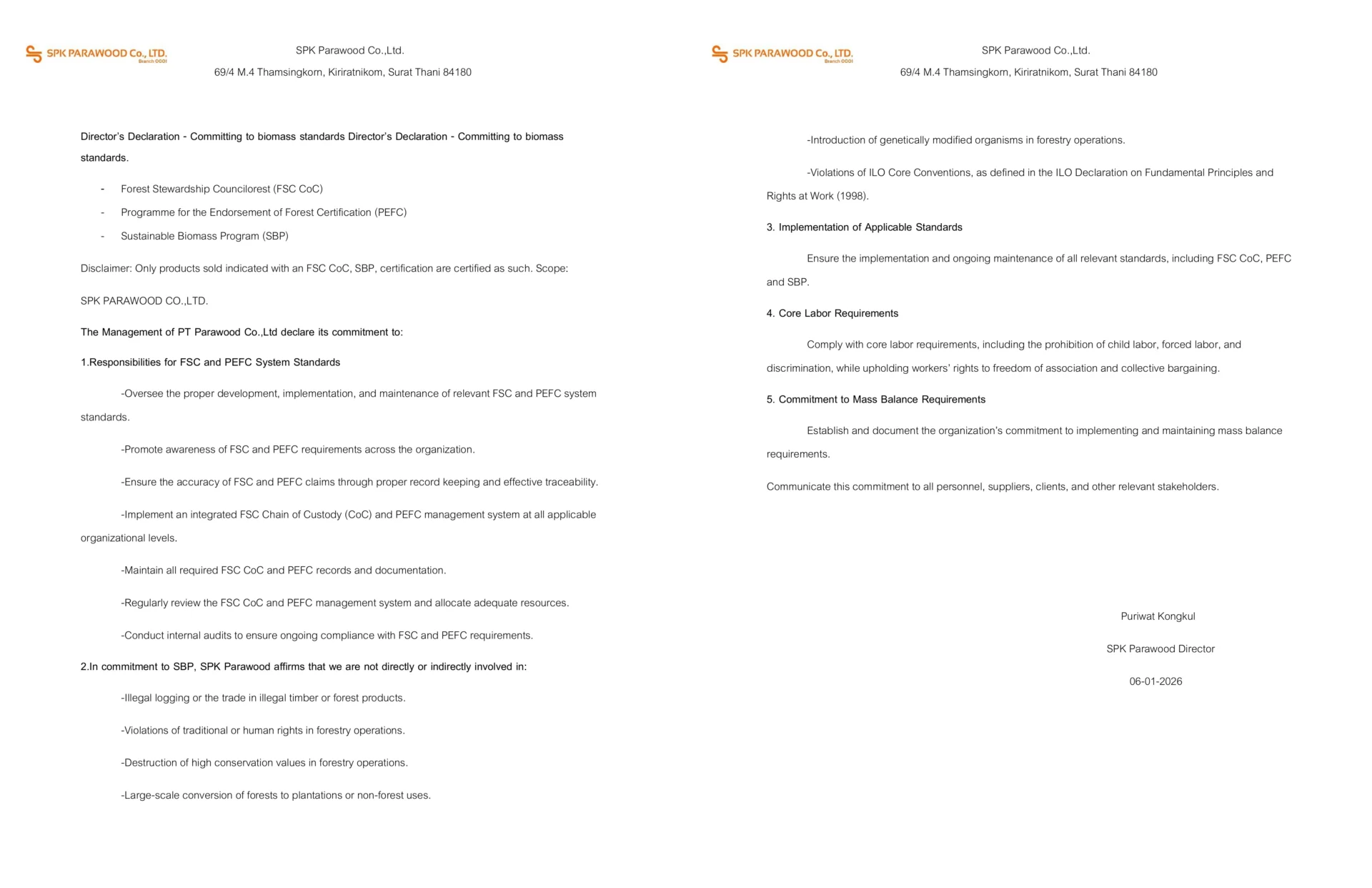
Board Commitment to Biomass Sustainability Standards
SPK’s Board of Directors has declared its commitment to compliance with applicable biomass sustainability standards. This commitment provides direction for responsible sourcing, documentation, operations, and continuous improvement.
Build a More Responsible Supply Chain with SPK.
Talk with our team about rubberwood, biomass, traceability, and long-term supply requirements.